Table of Contents
1. Introduction to family tents: size, space, and planning
2. Sizing and layout: from multi-room tents to large family tents
3. Durability and weather resistance: waterproofing, materials, and seams
4. Family tents FAQ
5. Conclusion: expert recommendations for selecting and using family tents
Introduction to family tents: size, space, and planning
Choosing Family tents starts with size, space, and planning. A quality option for family camping tents offers multiple sleeping zones or rooms and built-in gear vestibules or living areas to maximize comfort. large family tents keep kids close while adults enjoy a quiet corner for reading or gear organization. Multi-room layouts support different routines, and rugged fabrics with weatherproof seams protect you in rain or wind. Map your group size, gear, and trips to pick between a six-person tent with vestibule or a more expansive setup.
What defines a family tent
Design focus
Designed for family use with multiple sleeping zones or rooms and built-in gear vestibules or a living area to maximize comfort.
Practical features
Look for privacy dividers, durable zippers, weatherproof seams, and a spacious vestibule for gear; easy-access doors help families navigate at night.
Key metrics for evaluating large tents
Usable space vs listed capacity
The stated capacity is a guideline; check the floor plan and room count to estimate real sleeping zones and shared space.
Packed size, weight, and setup time
Consider packed dimensions and weight, plus how long setup takes. Favor models with simple assembly, color-coded clips, or pre-attached poles for beginners.
That attention to design and metrics informs sizing and layout: from multi-room tents to large family tents.
Sizing and layout: from multi-room tents to large family tents
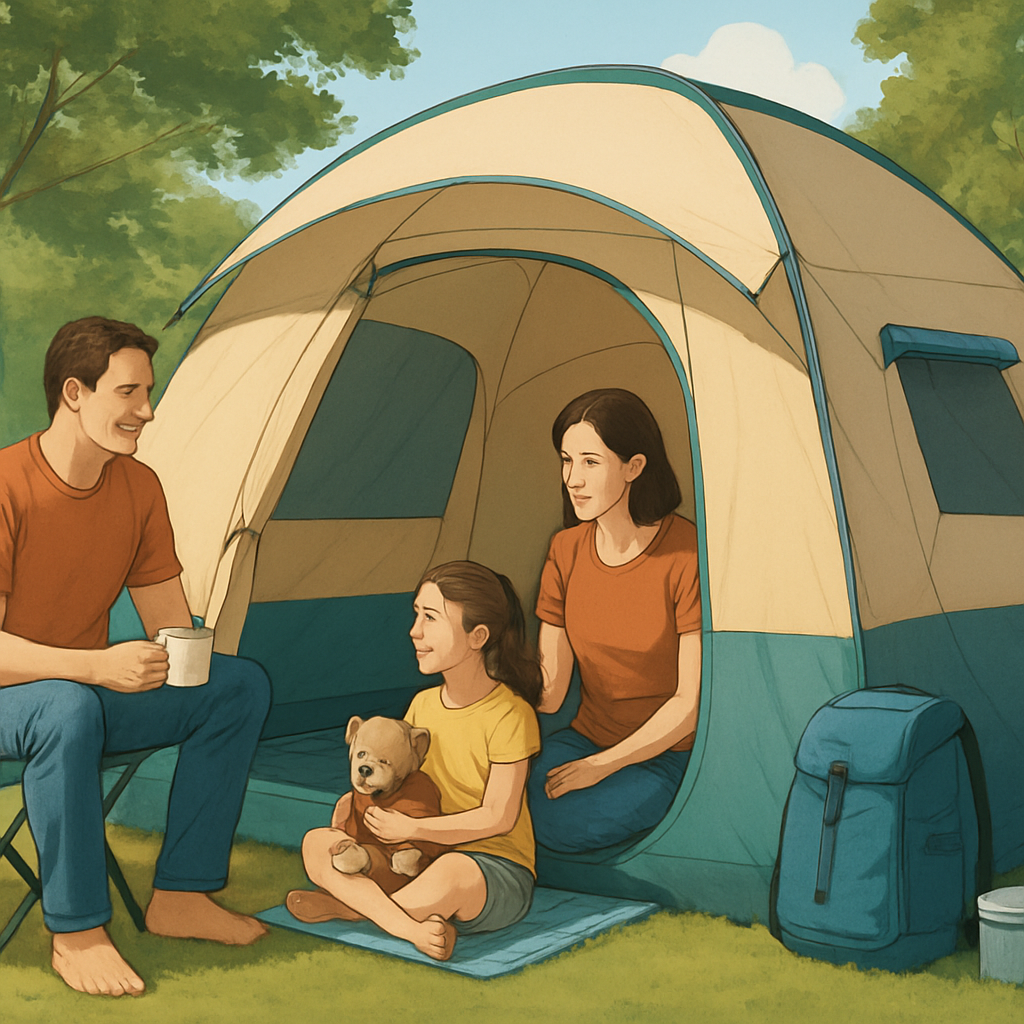
Choosing the right family tents means balancing sleeping privacy, living space, and ease of use. Multi-room configurations separate sleeping pods from common areas, which helps keep noise down and routines predictable for kids. Large family tents with thoughtfully designed layouts maximize living space, storage, and traffic flow. When shopping for family camping tents, pay attention to the number of rooms, the size and number of vestibules, and how doors open into walkways. The goal is a setup that accommodates gear, laundry, and play areas without encroaching on sleeping zones or adding complexity at every site.
Understanding multi-room configurations
Separate bedrooms, living areas, and storage zones improve privacy and organization
A true multi-room tent splits the interior into distinct zones: sleeping rooms, a central living area, and dedicated storage. For families of six to eight, this often means two to three sleeping areas plus a shared lounge or dining nook. Separate bedrooms reduce early-morning interruptions and make it easier to contain messes or muddy footwear. Storage zones—nooks for shoes, packs, and outerwear—keep gear off the floor and out of the main walkways. When evaluating models, look for clearly defined entry points into each room and a perimeter that feels natural from zone to zone. This kind of layout supports better organization and comfort in family camping tents, especially during longer trips or car camping weekends.
Choose layouts with clear traffic flow to minimize disruptions during day-to-day use
Flow matters as much as room count. Favor tent designs where doors open to a central aisle or a unified living space, instead of doors that dump traffic into sleeping zones. For example, a six-person family tent with vestibule access from both sides can route day-use traffic away from bedrooms while still providing quick entry to the exterior. Consider the location of interior dividers and the ease of retracting partitions if you want to switch between open-plan living and segmented rooms. A well-planned layout reduces constant shuffling and keeps nap times uninterrupted, making these tents a practical choice for busy weekends and longer trips.
The role of vestibules and entryways
Vestibules provide weatherproof storage and a mudroom area
Vestibules act as a buffer between outdoors and the sleeping areas. They provide weatherproof storage for boots, toys, and backpacks and can serve as a mudroom during wet days. A front vestibule that spans the tent width creates a protected zone for gear and cooking gear, while rear vestibules can offer additional storage without crowding the main living space. In family tents, vestibule presence often correlates with overall usefulness: more vestibule square footage means better space to organize gear without tracking dirt inside.
Adequate vestibule size supports gear storage and acts as a dry entryway
A practical vestibule size lets you stash jackets, rain gear, and smaller equipment while keeping the doorway clear. Look for roomy vestibules that allow a pair of boots, a bag, and a small chair set beneath the awning with the door closed. For a six-person family tent with vestibule, aim for at least 1.2–1.8 meters (4–6 feet) of depth per vestibule and a total width that accommodates at least one full entry area plus gear storage. This setup keeps the sleeping areas dry and comfortable, even when the weather turns or you’re transitioning between day and night activities.
Transitioning layouts like this influence how you approach durability and weather resistance: waterproofing, materials, and seams play a crucial role in maintaining the integrity of family tents in rain and wind.
Durability and weather resistance: waterproofing, materials, and seams
For family tents, longevity depends on a careful balance of waterproofing, construction quality, and storm-ready design. When shopping for a large family tent or a multi room tent, look beyond size and countable rooms to how the fabric, seams, and frame handle real-world conditions. The goal is a camping tent that stays dry, stands firm in wind, and lasts through seasons of family use.
Waterproofing and rain performance
Look for high hydrostatic head ratings and sealed seams to stay dry
- Hydrostatic head (HH) ratings indicate how much pressure water can exert before penetration occurs. For family tents intended for regular rain, target fabrics with at least 2000–3000 mm HH; for heavy downpours or extended trips, 4000 mm or higher is ideal.
- Sealed (taped) seams are non-negotiable. Factory-sealed, thermally taped seams prevent water from wicking through stitching. Re-sealing may be needed over time in tents with heavy use, but initial workmanship matters more than DIY fixes later.
Ensure rainfly, vestibule coverage, and groundsheet setup form a reliable water barrier
- Rainfly should extend well beyond wall lines and doors to shed rain effectively. Aim for at least 6–8 inches of overhang on all sides, with tight, taut attachment to avoid pooling.
- Vestibules provide dry entry points and extra storage; ensure they’re shielded by the rainfly and have adequate coverage over zippers.
- Groundsheet setup matters: a fully integrated or separate bathtub-style floor with taped seams creates a reliable water barrier against ground moisture. Use groundsheet that matches the tent’s footprint and avoid gaps where water can wick in.
Wind resistance and material quality
Sturdy frame design with guy-out points improves stability in wind
- A robust frame—prefer aluminum poles or high-strength fiberglass with cross-bracing—reduces sway in gusts. Look for multiple guy-out points at corners and midpoints to keep the tent taut.
- Include quality stakes and guy-lines (ideally 6–8 lines total) and clear guidance on staking in different soils. Mobile families will appreciate a six-person family tent with vestibule that holds its shape under wind when properly guyed out.
Fabric denier, UV resistance, seam sealing, and durable zippers affect long-term performance
- Fabric denier (D) indicates durability and weight: higher values (e.g., 68D–150D) generally yield tougher, longer-lasting material suitable for family camping tents.
- UV resistance protects against sun degradation; look for fabrics with UV inhibitors to extend life across seasons.
- Seam sealing and durable zippers matter for long-term performance. Seams should be tape-sealed; zippers should be heavy-duty, weather-resistant, and backed by storm flaps to guard against catching rain; brands with reliable YKK or equivalent zippers perform better in the long run.
- These factors collectively influence how a tent ages—from a six person family tent with vestibule to a spacious family tent with multiple rooms—especially when used frequently or in harsher climates.
Tip: When comparing models, pair a high HH rating and taped seams with a sturdy frame and durable fabrics. A well-built family tent that remains dry, stable, and easy to live in is the core of dependable family camping tents, whether you’re car camping or venturing into remote sites.
Family tents FAQ
These questions address practical choices for family tents, focusing on car camping, setup ease, and vestibule-equipped options.
What is the best family tent for car camping?
For car camping, look for a large, multi-room design with reliable weather protection. A big footprint, at least two sleeping areas, a full rainfly, and a sturdy vestibule let your family stay comfortable and organized, even with wet gear. A six-person option with vestibule often fits larger families or abundant gear.
Key features for car camping
- Large footprint and multi-room layout
- Vestibule for gear and entry
Setup practicality
- Color-coded poles and clips simplify assembly
- Practice setup at home to reduce on-site time
How easy is setup for beginners?
Many family tents now use cabin or dome frames with intuitive color-coding and fewer poles. Choose models with pre-attached poles or hub-based frames and a simple step-by-step layout to speed up the process.
Setup shortcuts
- Color-coded parts and clips
- Pre-attached poles or hub system
Early practice
- Dry-run in the yard before your trip
What is a six person family tent with vestibule?
This setup adds interior sleeping space for six plus a sheltered vestibule for gear and muddy boots. The vestibule increases usable area, improves weather protection, and keeps the interior uncluttered.
Space details
- Typical interior roughly 90–110 sq ft
- Vestibule adds 20–40 sq ft
Practical uses
- Gear storage and quick entry in rain
expert recommendations for selecting and using family tents
Choosing the right family tents hinges on space, setup simplicity, and weather resilience. For car camping and family weekends, prioritize layouts that maximize room without overcomplicating setup. For rain and wind, waterproofing and seam integrity become the deciding factors. The goal is a durable, easy-to-use shelter that adapts to your group’s size, gear, and travel style.
Key takeaways for choosing a family tent
Prioritize family tent features like multiple rooms, vestibules, and easy setup to suit your car-camping or family camping needs
Multiple rooms or a floor plan with a central living area improves organization for kids, gear, and gear shifts. A vestibule provides weatherproof storage for boots and packs, reducing clutter inside. Favor tents with intuitive pole configurations, color-coded clips, and pre-attached guylines to speed up setups, especially for beginners.
Choose a size and layout that matches your group, gear, and travel style, keeping the main keyword ‘Family tents’ in mind
Estimate headcount plus gear: count sleeping bags, packs, and a small air mattress. If you often car-camp, a six person family tent with vestibule can balance sleeping space with exterior storage. For larger groups or longer trips, consider a spacious family tent with multiple rooms to keep privacy and reduce noise transfer at night.
Practical, data-backed checklist for buying and using family tents
Use objective benchmarks to compare models and decide where to invest in durability, weather protection, and ease of use.
Waterproofing and weather resistance
Look for a rainfly that fully covers the sides, taped seams, and a robust floor. Target a hydrostatic head rating appropriate to your climate (1000–2000 mm for light rain, 2000–3000 mm+ for heavier rain/wind). Verify zipper protection and mesh door guards for ventilation without leaks.
Setup complexity, durability, and warranty
Assess the number of poles, color-coded components, and freestanding capability. Check fabric denier, seam construction, and manufacturer warranty (prefer 2–3 years or more for frequent use).
Model compatibility with your camping style
Car camping benefits from easy setup, quick entry, and generous vestibules; backpacking-focused tents sacrifice space and introduce weight. Use a decision rubric to align features with your trips.
Decision rubric using long-tail cues
- Best family tent for car camping: prioritize ease of setup, a large vestibule, and quick access doors.
- Spacious family tent with multiple rooms: emphasize internal dividers, separate sleep zones, and privacy.
- Six person family tent with vestibule: confirm true capacity, tall ceilings, and ample exterior storage.
- Easy setup family tent for beginners: seek color-coded poles, hub systems, and freestanding design.
| Criterion | Focus | Why it matters |
|---|---|---|
| Waterproofing | Rainfly coverage, taped seams | Keeps interiors dry in downpours |
| Weather resistance | Robust materials, seam integrity | Handles wind and rain transitions |
| Setup complexity | Color coding, freestanding design | Reduces time and frustration |
| Durability & warranty | Fabric quality, zipper reliability, warranty length | Long-term protection for family use |
| Car camping compatibility | Vestibule size, quick-entry | Maximizes gear organization |